Chimney Repair and Removel.
Professional chimney repair, sweeping, removel and maintenance across Cork, Kerry, Clare, Limerick and Tipperary. Fully insured team with 25 years tools hand on experience.
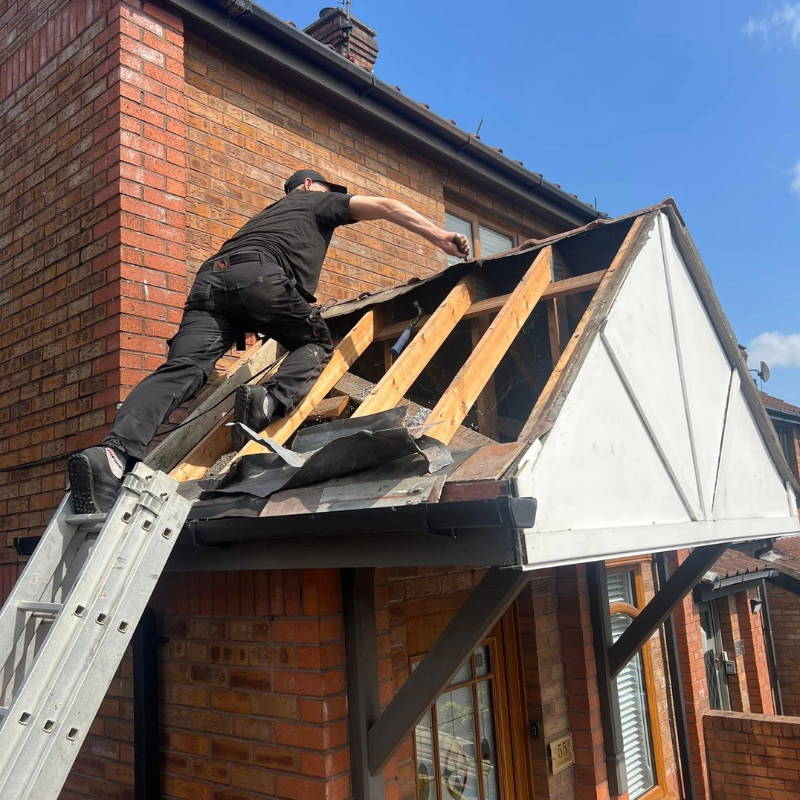
Chimney Repair & Removal in Cork, Kerry, Clare, Tipperary & Limerick
Your chimney is one of the most exposed parts of your roof — standing proud of everything else and taking the full force of the wind, rain, and frost. Over the years, that exposure takes its toll. Cracked masonry, crumbling mortar, and failed flashing are common, and because the chimney sits at a vulnerable point in the roof, problems here are a frequent source of leaks.
At Capital Roofing And Maintenance, we’ve spent 25 years repairing, reflashing, and removing chimneys across Munster. Whether yours needs restoring or taking down altogether, here’s what you need to know.
Chimney Repair
A chimney in poor condition doesn’t just look bad — it lets water into your home and can become genuinely unsafe. Most chimney problems can be repaired, and catching them early keeps a small job from turning into a big one.
Common chimney problems:
- Cracked or crumbling mortar between the bricks (failed pointing)
- Loose, spalling, or damaged brickwork
- Cracked or damaged chimney crown or capping at the top
- Leaning or unstable stacks after years of weathering
- Damaged or missing chimney pots
- Damp and staining on chimney breasts inside the house
How to spot it:
- White staining (efflorescence) or damp patches on the chimney breast
- Crumbling mortar or bits of brick in the gutters below
- Visible cracks or gaps in the chimney masonry
- A chimney that looks like it’s leaning or listing
- Damaged pots or capping visible from the ground
Why it matters: A chimney takes more weather than almost any other part of your roof, so once the masonry or mortar starts to fail, water gets in fast — and it travels down into the roof space and the rooms below. Repairing cracked pointing, rebuilding damaged brickwork, or renewing the capping keeps the chimney watertight and structurally sound. Left alone, a deteriorating chimney only gets more dangerous and more expensive to put right.
Chimney Lead Flashing Repair & Replacement
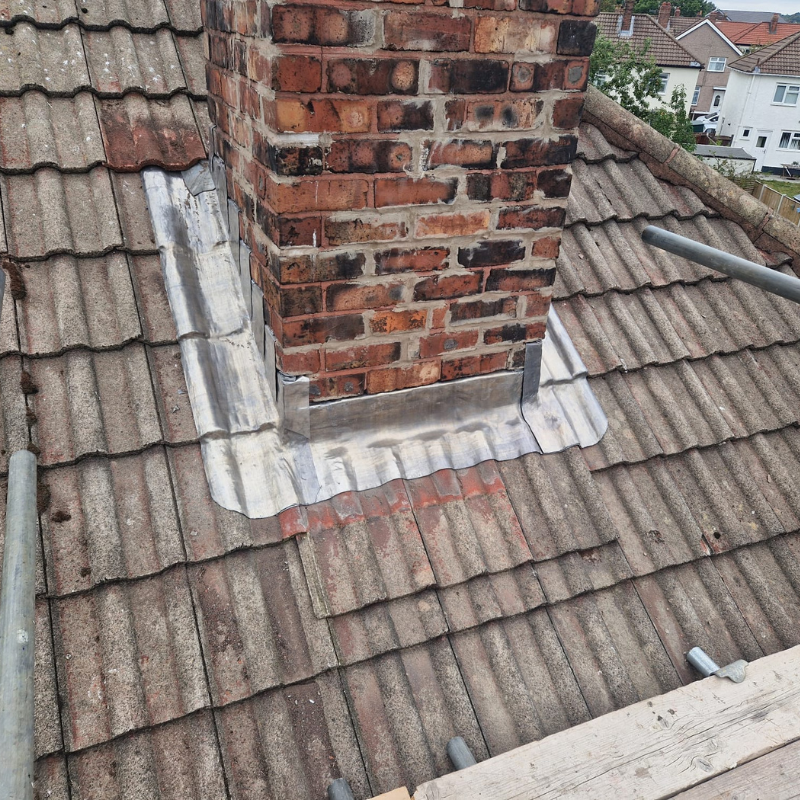
Lead flashing is the weatherproof seal where your chimney meets the roof. It’s one of the most common places for leaks to start, because if the lead cracks, lifts, or the pointing holding it fails, water runs straight down into the roof.
Common lead flashing problems:
- Cracked or split lead after years of expansion and contraction
- Lifting or loose flashing pulling away from the chimney or roof
- Failed pointing where the lead is mortared into the brickwork
- Corroded or aged flashing on older installations
- Poorly fitted flashing from previous cheap or rushed work
How to spot it:
- Damp patches on the ceiling near the chimney
- Water stains in the attic around the chimney breast
- Visibly cracked, lifted, or slipped lead around the base of the chimney
- Leaks that appear specifically after heavy rain
Why it matters: The join between a chimney and a roof is one of the weakest points on the whole roof, and the lead flashing is the only thing sealing it. When that seal fails, water pours straight into the structure — often showing up as a damp patch near the chimney. Repairing or replacing the flashing with properly fitted lead restores the seal and stops the leak at its source. It’s a small job that prevents a lot of damage.
Chimney Removal
Not every chimney is worth keeping. If yours is no longer used, in poor condition, or you simply want to free up space and simplify your roof, removing it can be the sensible choice.
Reasons homeowners remove a chimney:
- The chimney is no longer in use and just sitting there deteriorating
- It’s a persistent source of leaks and repairs no longer make sense
- The stack is unstable or unsafe after years of weathering
- Freeing up space in rooms or the attic where the breast intrudes
- Simplifying the roofline and removing an ongoing maintenance headache
- Renovation or extension work that makes the chimney redundant
What removal involves:
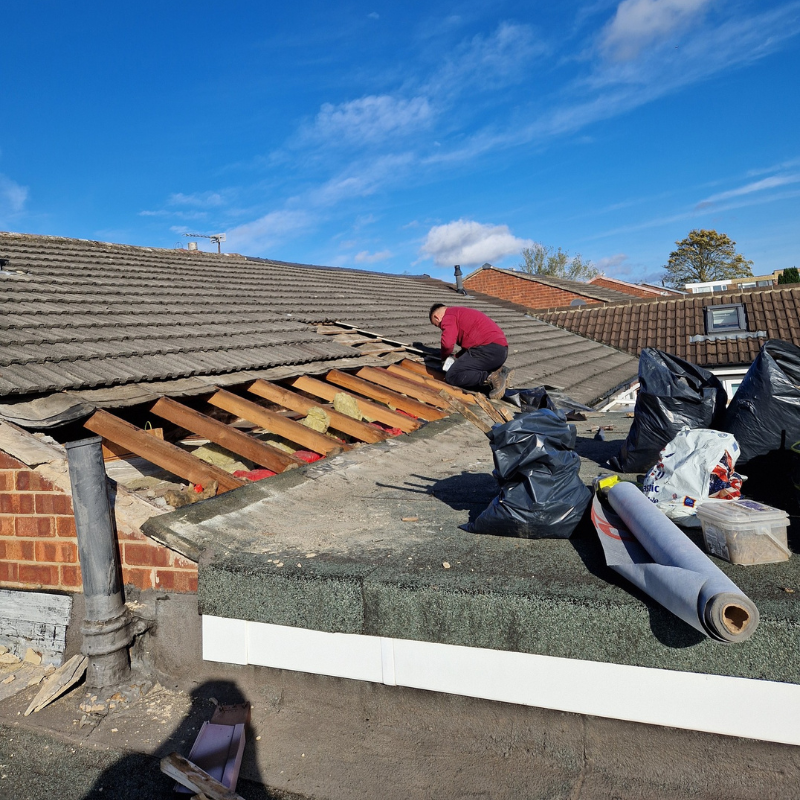
- Taking down the chimney stack safely and cleanly
- Making good the roof where the chimney stood, leaving it fully watertight
- Tidy removal of all debris and materials
- A finished, weatherproof roof with no trace of the old stack
Why it matters: An unused chimney in poor condition is a liability — it keeps letting in water, needs ongoing maintenance, and can become unsafe. Removing it properly and sealing up the roof afterwards ends the problem for good and can free up useful space inside the house. The key is making sure the roof is left completely watertight where the chimney came out — which is exactly what we do.
Chimney Trouble? Let's Take a Look.
A cracked chimney or failed flashing only lets in more water the longer it’s left — and an unsafe stack won’t fix itself. Get in touch and we’ll come out, assess it properly, and give you a straight answer on whether it needs repairing, reflashing, or removing.
The common warning signs are crumbling mortar between the bricks, loose or spalling brickwork, cracks in the masonry or capping, bits of brick and mortar appearing in your gutters, or damp patches and white staining on the chimney breast inside. A chimney that looks like it's leaning is another red flag. If you spot any of these, it's worth having it checked — when we come out for your free inspection, we'll tell you exactly what needs doing.
Very often, yes. The join between a chimney and the roof is one of the most common places for leaks to start, usually because the lead flashing has cracked, lifted, or the pointing holding it has failed. A damp patch near the chimney breast is a classic sign of failed flashing. We'll get up there, find out whether it's the flashing, the masonry, or the capping, and fix the actual source of the water.
Lead flashing is the weatherproof metal seal where your chimney meets the roof — it's what stops water running down the join into your home. Over time, lead expands and contracts with temperature changes, which can eventually cause it to crack, split, or lift away. The mortar that holds it into the brickwork can also fail with age. When that happens, water gets straight in, so the flashing needs repairing or replacing to restore the seal.
It depends on whether you still use it and what condition it's in. If the chimney is sound and in use, repairing it and keeping it watertight is usually the right call. But if it's no longer used, in poor condition, unstable, or a constant source of leaks, removal can be the more sensible and cost-effective option — and it frees up space and ends the maintenance. We'll assess it honestly during your free inspection and talk you through both options.
Once the stack is taken down, we make good the roof where the chimney stood, sealing it up so it's completely watertight and blends in with the rest of the roof. All the debris is cleared away and tidied, leaving you with a clean, finished, weatherproof roof and no trace of the old chimney. Making sure the roof is fully sealed afterwards is the most important part of the job.
Yes. We stand over every job we do. Our chimney repair, reflashing, and removal work comes with a satisfaction guarantee — if you're not happy with it, we'll come back and put it right, free of charge. On top of that, our whole team is fully qualified, licensed and insured, so you're covered from start to finish. If it's not right, we make it right.